The Catamaran Market in 2026: A Structural Shift in Modern Yachting
- 3 days ago
- 4 min read

The global catamaran market is no longer a niche segment of recreational boating. It has evolved into one of the most resilient and strategically important sectors in modern marine leisure, driven by changing demographics, experiential luxury, remote work flexibility, charter economics, and advances in sustainable marine technology.
For decades, monohulls represented the cultural and technical standard of sailing. Today, however, catamarans increasingly dominate both private ownership and charter operations — not merely because they are fashionable, but because they align more effectively with the way affluent consumers now live, travel, entertain, and invest.
Industry analysts project continued expansion of the global catamaran market through the next decade, with steady growth across private cruising, luxury charter, and hybrid-electric platforms.
A Market Driven by Lifestyle Economics
One of the most significant developments in the marine industry over the last ten years has been the transformation of yachts from purely recreational assets into hybrid lifestyle-investment vehicles.
The modern catamaran addresses several priorities simultaneously:
Residential comfort
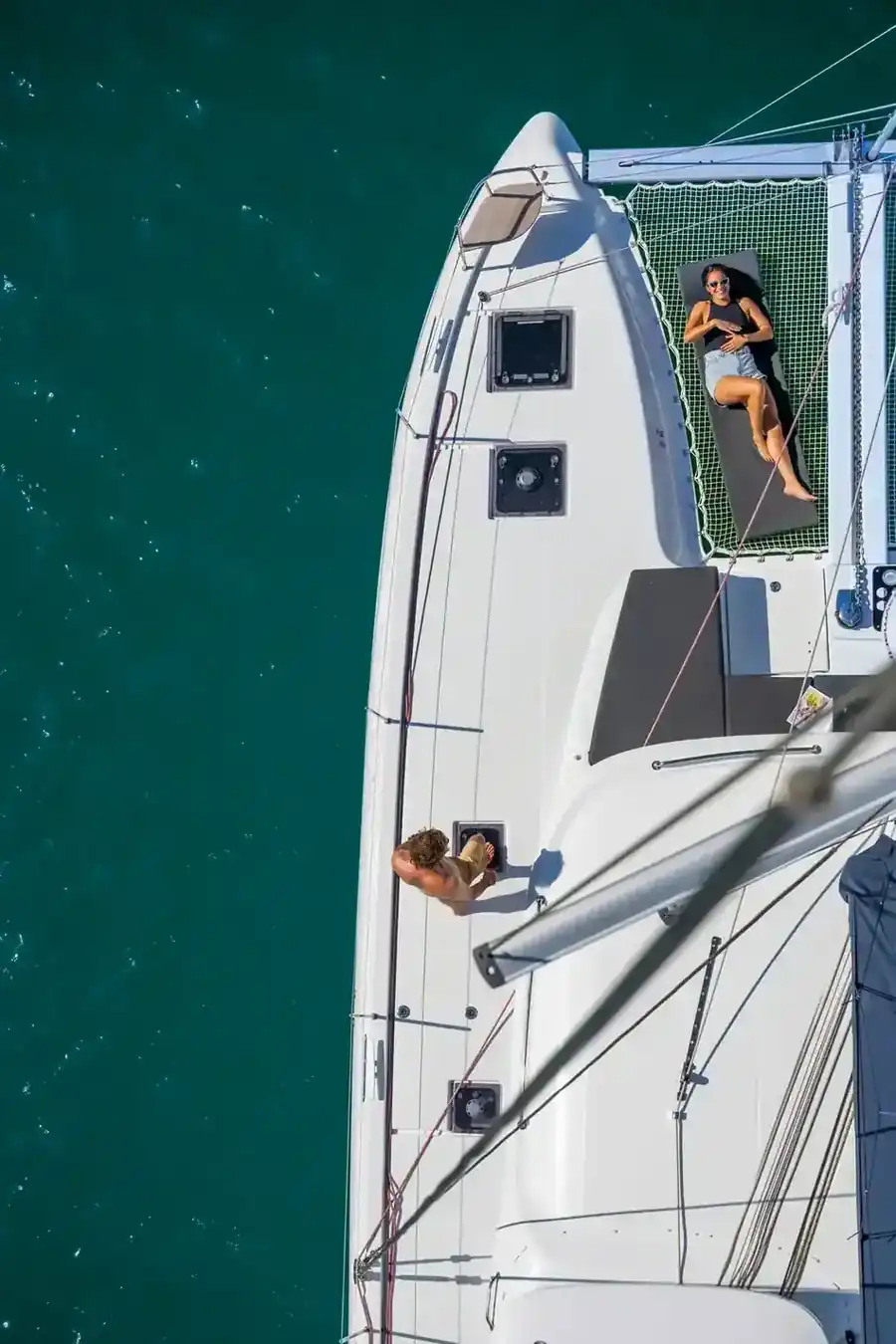
Family-oriented travel
Remote-work capability
Hospitality-driven experiences
Revenue-generation through charter management
Long-range cruising with reduced operational stress
This convergence explains why catamarans have expanded dramatically in global charter fleets. Mediterranean fleet data suggests catamaran market share increased from roughly 15% in 2014 to more than 40% in 2026.
The shift is particularly important because charter fleets often serve as a leading indicator for broader consumer demand. Operators allocate capital toward vessels that maximize utilization rates, guest satisfaction, and operational profitability.
Catamarans now outperform monohulls in each category.
According to recent market data, catamarans command charter pricing premiums of approximately 25–40% while also achieving higher seasonal utilization rates.
In economic terms, the market is rewarding space efficiency and onboard livability.
The Psychology of the Modern Buyer
The demographic profile of yacht buyers has changed substantially.
Historically, yacht ownership skewed toward retirees with significant discretionary time. The post-pandemic environment accelerated a different buyer profile:
Younger entrepreneurs
Technology executives
Remote professionals
Experience-oriented families
Investors seeking lifestyle assets
These buyers are not necessarily looking for traditional sailing purity. They are seeking flexibility, comfort, and experiential value.
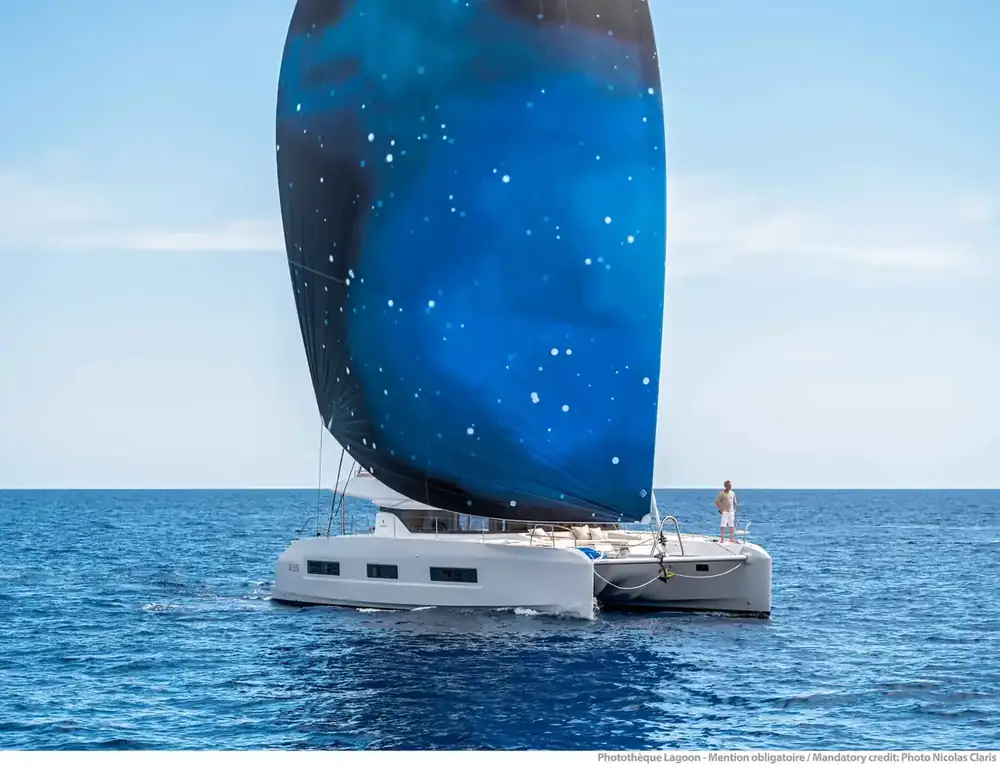
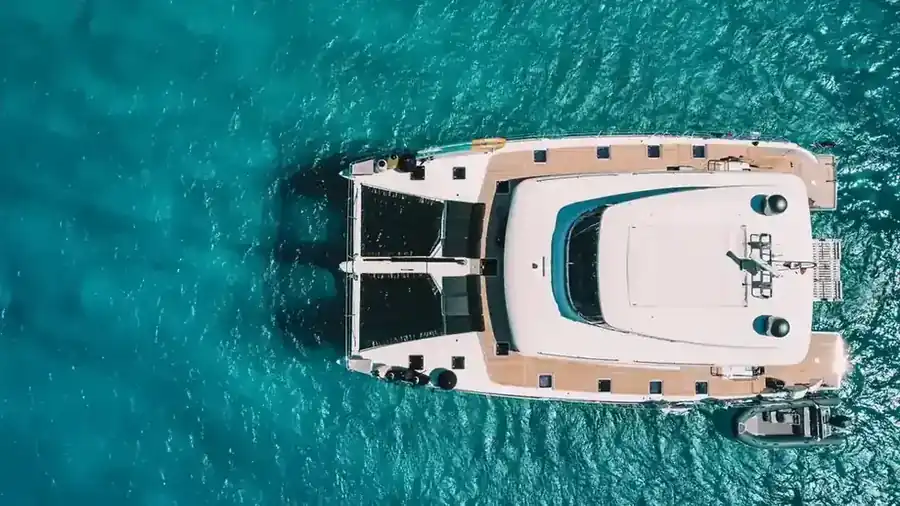
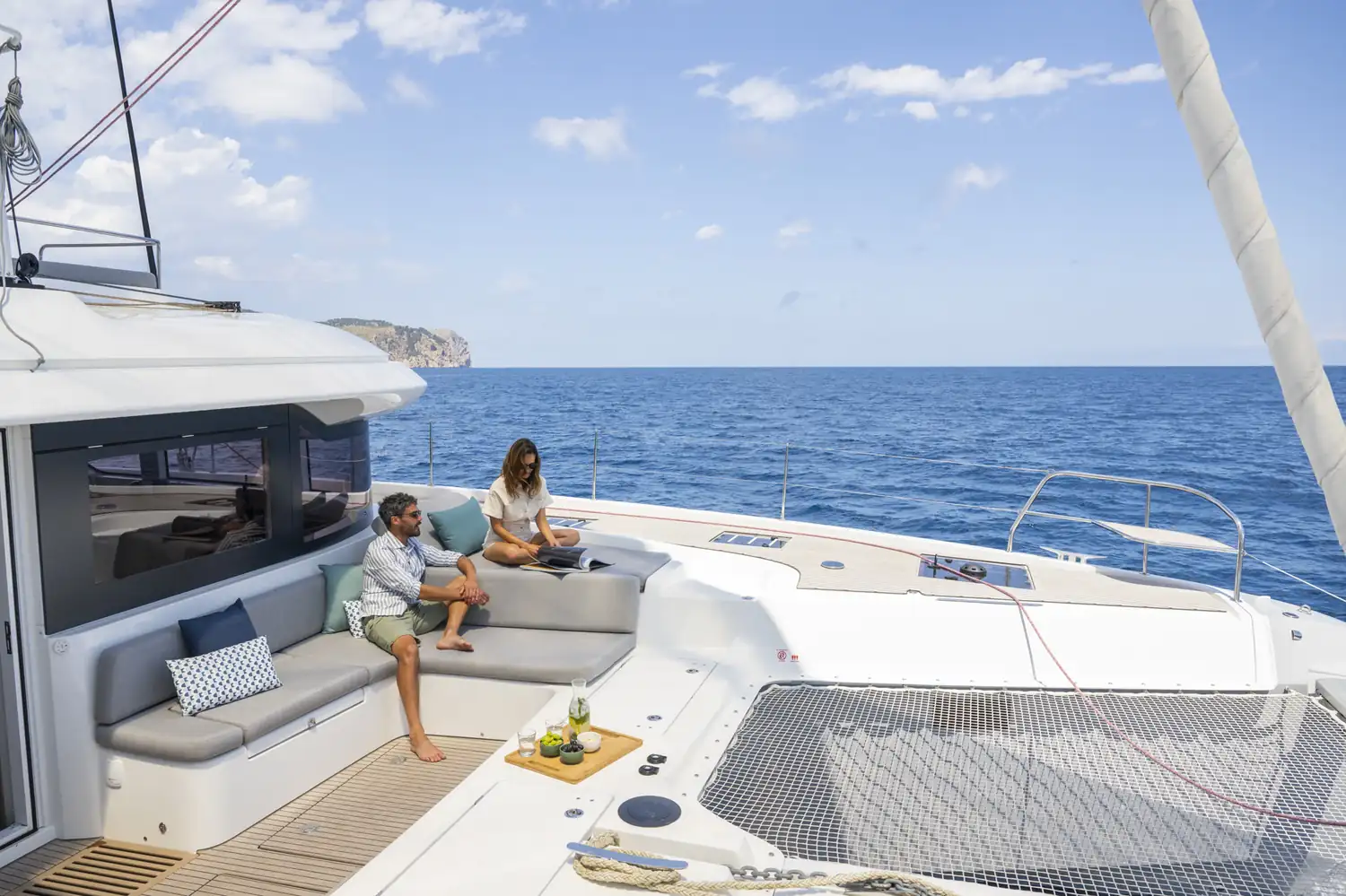
The modern catamaran functions less like a conventional sailboat and more like a floating luxury residence with mobility. Wide beam designs, expansive social areas, panoramic visibility, and multiple ensuite cabins align naturally with contemporary hospitality expectations.
This is particularly relevant in an era where social media and experiential branding influence purchasing behavior. Catamarans photograph exceptionally well, support group-oriented experiences, and integrate seamlessly into aspirational travel culture.
The vessel itself becomes part transportation platform, part hospitality environment, and part personal brand asset.
Charter Ownership and the Financialization of Boating
Another defining trend is the growing sophistication of charter ownership programs.
While traditional yacht ownership was historically viewed as a pure expense, many buyers today evaluate vessels through a blended framework combining:
Personal use
Tax strategy
Depreciation
Revenue offsets
Asset preservation
Lifestyle utility
This does not imply yachts become profit-generating assets in the conventional investment sense. However, professionally managed charter programs can materially reduce net ownership costs.
Industry discussions increasingly resemble real estate conversations:
occupancy rates,
operating margins,
residual values,
financing structures,
and utilization efficiency.
Online discussions among owners and brokers reflect growing acceptance of structured charter ownership as a rational lifestyle-finance model rather than a compromise.
This evolution favors catamarans disproportionately because they are better suited to hospitality operations:
greater guest capacity,
superior stability,
larger entertaining areas,
shallower draft access,
and reduced motion discomfort.
In practical terms, they monetize more effectively.
The Rise of Sustainable Marine Design
Electrification and sustainability are no longer peripheral themes in yachting. They are becoming central purchasing criteria among high-net-worth buyers.
Recent market analysis points to growing demand for:
hybrid propulsion,
solar integration,
advanced energy management systems,
lighter composite construction,
and reduced-emission cruising platforms.
Catamarans are uniquely positioned to benefit from this transition.
Their wider beam allows significantly larger solar arrays, increased battery storage capacity, and improved energy autonomy. In many ways, multihulls provide the physical architecture most compatible with next-generation marine electrification.
This matters particularly to younger affluent buyers who increasingly associate luxury with sustainability rather than excess alone.
Even at the ultra-luxury level, the industry is moving toward environmentally conscious engineering. Hydrogen-assisted propulsion and hybrid systems are becoming visible differentiators in premium yacht design.
Supply Constraints and Pricing Pressure
Despite global economic uncertainty, premium catamaran demand remains robust.
Several structural dynamics continue supporting pricing:
Limited production capacity
Skilled labor shortages
Strong charter demand
Long order books
High raw material costs
Increasing technological complexity
As a result, new production catamarans have experienced significant price appreciation over the last decade. Market guides now place the practical ownership range for modern cruising catamarans between approximately €280,000 and €950,000, with luxury models extending far beyond that range.
At the same time, secondary market behavior has become more nuanced.
Well-maintained, recognizable brands with strong charter reputations continue to retain value relatively well. Lesser-known brands, particularly in niche segments, face more volatile resale conditions due to limited buyer pools and weaker long-term service infrastructure.
This mirrors broader luxury markets where brand credibility increasingly functions as a form of risk mitigation.
The Strategic Divide: Volume vs Boutique Builders
The current market is increasingly polarized between:
Large-scale production builders
Boutique performance or luxury shipyards
High-volume manufacturers dominate charter fleets because they optimize:
interior volume,
operational simplicity,
global support networks,
and financing accessibility.
Meanwhile, boutique builders compete through:
sailing performance,
customization,
design sophistication,
and exclusivity.
This segmentation reflects a maturing market. Buyers are becoming more educated and purpose-driven.
The key question is no longer:“Which boat is best?”
It is:“What operational lifestyle is this vessel designed to support?”
That distinction fundamentally changes the purchasing process.
The Future Outlook
The long-term outlook for the catamaran sector remains exceptionally strong.
Several macro trends continue to support expansion:
Growth in experiential luxury spending
Increased remote work flexibility
Rising charter participation
Demand for multigenerational travel
Sustainable tourism priorities
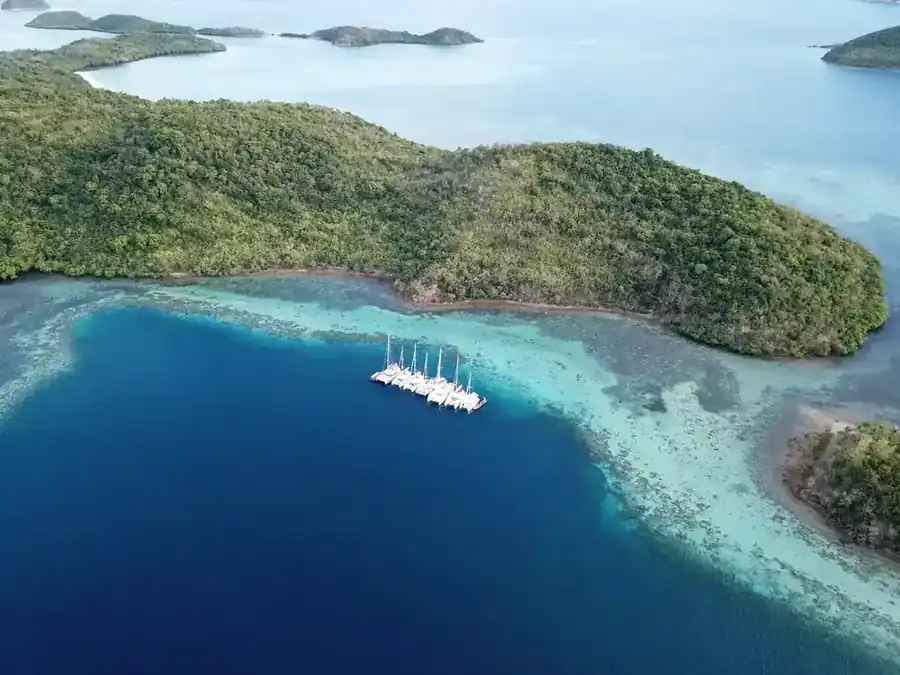
Expanding marina infrastructure for multihulls
Wealth growth among younger affluent demographics
The broader yacht market itself is evolving toward platforms that maximize onboard living quality rather than traditional sailing ideology alone.
Catamarans sit precisely at the intersection of those demands.
The result is not simply a boating trend, but a structural redefinition of modern leisure marine consumption.
For sophisticated buyers, the modern catamaran is increasingly viewed not as an indulgence detached from practical reasoning, but as a highly adaptable lifestyle platform capable of combining mobility, hospitality, autonomy, and experiential value in a single asset class.
And that is why the category continues to outperform.


Comments