

Yachting Solutions
Buying the boat is one afternoon. This is the rest of it — and the part that decides whether your first season starts on time.
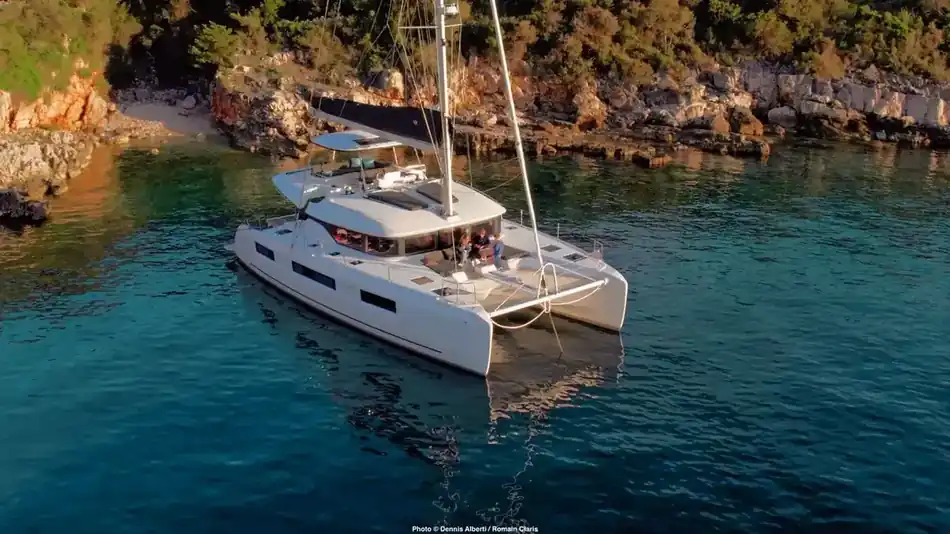
Nobody loses a season because they chose the wrong upholstery. They lose it because the loan approval arrived after the build slot closed, because the documentation was filed in the wrong order, or because there was no skipper available the week the boat was ready. Below is each of those, with the timing that actually matters.
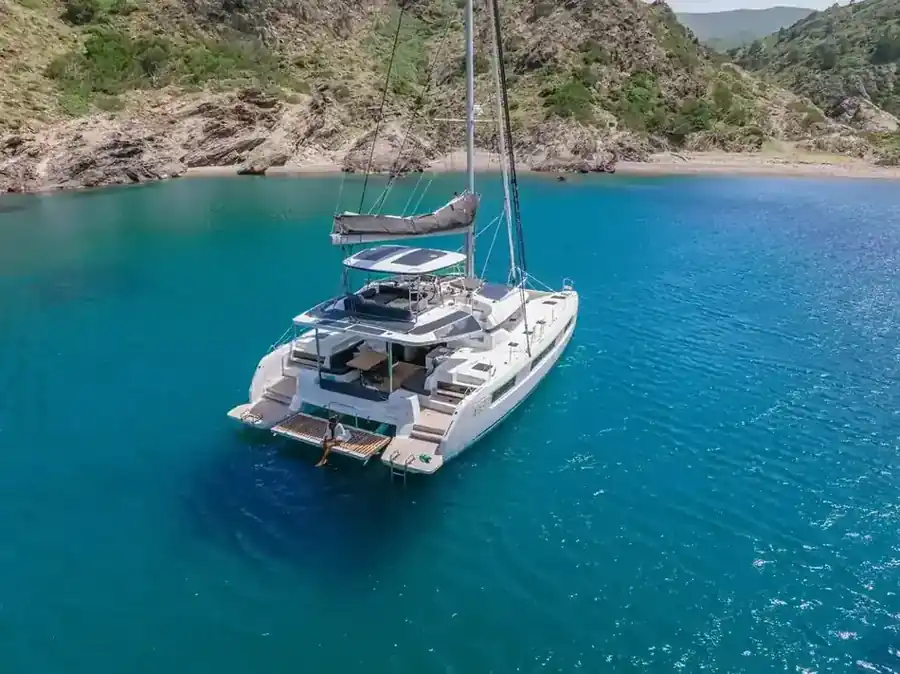
Start this before you choose the boat
Marine lending is a small world and multihulls are a smaller one inside it. Plenty of banks that happily write a monohull will balk at a catamaran, or will write it at terms that make no sense — usually because the underwriter has no comparable resale data in front of them.
We do not broker your loan. What we do is put you in front of lenders and underwriters who write multihulls routinely, early enough that the approval is not the thing holding up a build slot.
- Pre-approval before deposit. A slot at the yard is a commitment. Know your number first.
- Insurance quoted against the actual spec. Underwriters price the boat you are building, not the base boat — get the quote after the options are locked, not before.
- Named-storm and cruising limits. If you intend to go south for the winter, that has to be in the policy from day one, not added later.
- Survey timing. An acceptance survey at handover is worth having even on a new boat, and some underwriters will want one.
We are a yacht dealer, not a lender, broker or insurance agent. Introductions only — the terms are between you and them.
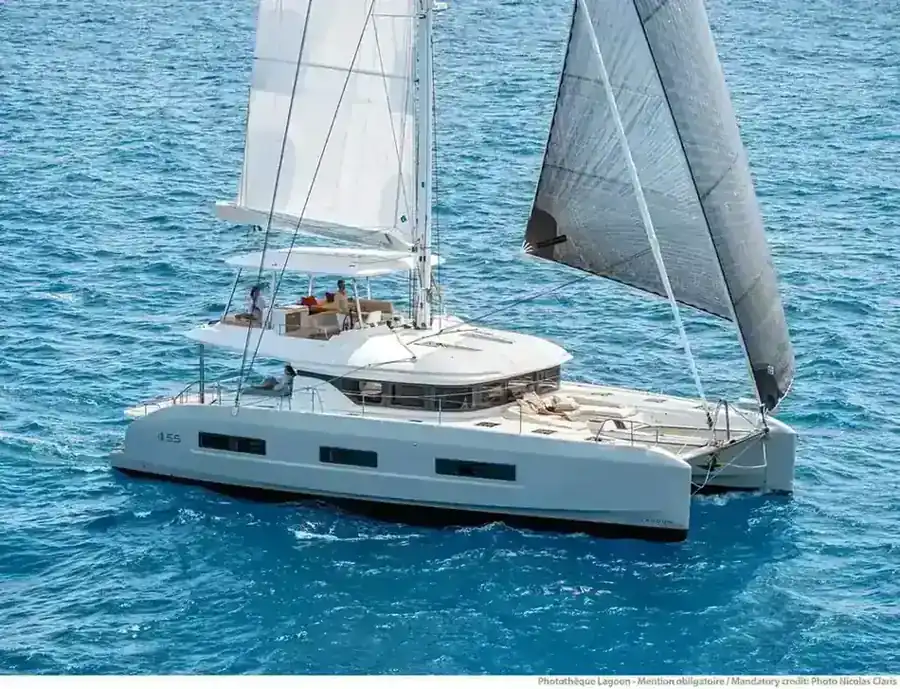
Getting her from the yard to your berth
Your boat is commissioned somewhere it was convenient to commission it. That is rarely where you keep it. Between those two points sits a passage, a weather window and a crew — and how you handle that first trip sets up the whole season.
- Delivery skipper. Someone who has run that stretch of coast before, in that month, on this kind of boat.
- Owner aboard, if you want it. The delivery is the single best training run you will ever get on your own boat. Most owners who come along stop being nervous about it somewhere off Block Island.
- Shakedown list. Everything that rattles, leaks, chafes or trips a breaker on the first hundred miles gets written down and goes back to the commissioning yard while it is still their problem.
- Yard-to-yard or dock-to-dock. We will quote either. Dock-to-dock costs more and is worth it if you cannot take the time off.
Filed in the right order, which is not the obvious one
Registration, flag and title are not hard. They are sequential — and doing step three before step two is how a boat ends up sitting at a dock, finished, uninsurable and unable to leave.
- Ownership entity
Personal name, LLC, or the active-business structure we cover separately. Decide before the builder’s invoice is raised — changing the named owner afterwards means re-papering everything.
- Import and duty
The boat is built in France. Whether duty applies, and at what rate, depends on how and where she enters — this is settled before she ships, not after she lands.
- Federal documentation or state title
USCG documentation suits most cruising boats and is usually required for financing; state registration suits some. They are not interchangeable and the choice affects where you can cruise.
- State registration and sales/use tax
Determined by where the boat is principally kept, not where you bought it or where you live. This is the single most expensive thing people get wrong.
- Insurance binding
Cover has to be live before the first passage, which means the paperwork above has to be finished before the boat is ready — not on the same day.
We coordinate this with your documentation agent and your accountant. Signature Catamarans is not a law or accountancy firm and none of this is tax advice.
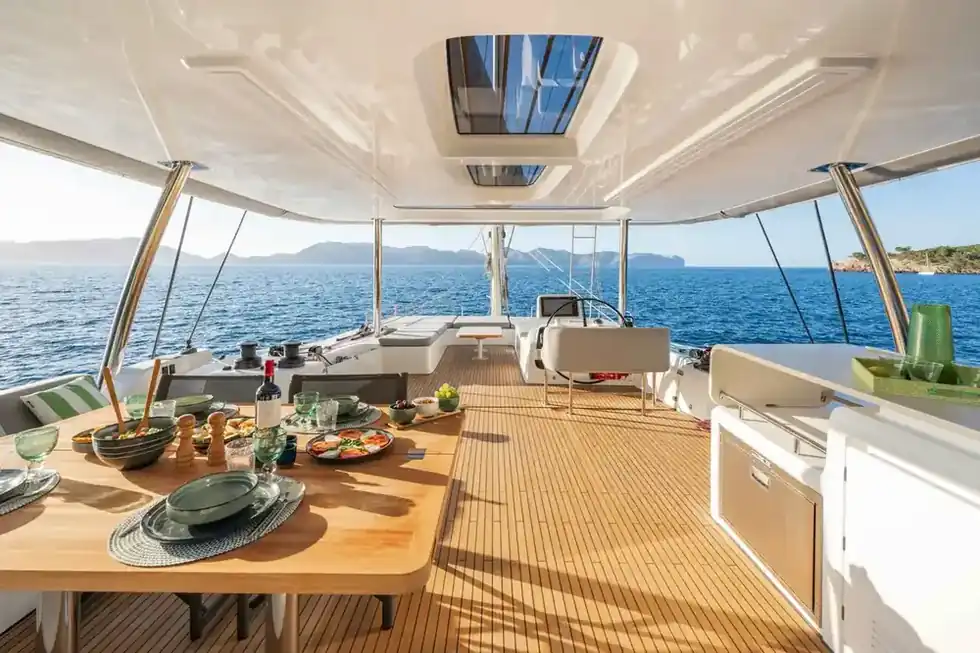
Added later, specified so they do not fight the build
Two seasons in, most owners want three things: more power, better electronics, and something to make the cockpit usable in weather. All three are straightforward if the boat was built expecting them, and expensive if it was not.
- Energy first. Solar, lithium and an inverter are one system, not three purchases. Sizing them together is the difference between running the generator at anchor and not.
- Electronics that match the bus. Adding a second brand of instrument to an existing network is how you end up with two screens that disagree about depth.
- Canvas and shade. The cheapest upgrade that changes how much you use the boat.
- Watermaker and tankage. Worth doing before a season away, not during one.
Where a job is better done at the factory than at a dock, we will tell you — and if that means waiting for the next build slot rather than retrofitting, we will tell you that too.
Not sure which of these you need yet?
Most people do not, at the start. Tell us where you are and we will tell you what has to happen first.
Design the Lagoon you actually want
Start with a model, shape the layout and finishes, then send the specification to our team. No obligation — just a real starting point.